Bogor Botanical Gardens


Just 60 km south, or a mere one hour by road from Jakarta lies the town of Bogor, once known as “Buitenzorg” meaning “free of care”, located at the foothills of Mt. Salak. It has a high, year-round rainfall and a much cooler climate compared to metropolitan Jakarta. Here are spread out the 87 hectares world famous Bogor Botanical Gardens (Kebon Raya Bogor), with the impressive out-of-town Bogor Presidential Palace fronting it and soaring Mt. Salak at its background.

Bogor Botanical Gardens boasts over 400 species of palm trees, 5,000 trees gathered from around the tropical world, and an orchid house containing 3,000 varieties. Records show that the Bogor Botanical Gardens harbours 3,504 plant species, 1,273 genus in 199 families.

The Gardens are said to have been initiated by Sir Thomas Stamford Raffles, who, between 1811-1816, became Governor General of the East Indies during the interim reign of the British over the archipelago. With the help of botanists from London’s famed Kew Gardens, Raffles first laid out a small garden. However, the Gardens were officially established by the Dutch in 1817 under the directorship of CGC Reinwardt. A memorial to Raffles’ wife still stands in the Gardens.

The Bogor Gardens today function as an ex situ conservation site, a research center for taxonomy and plant utilization. In horticulture the Gardens study adaptation, planting and propagation of plants and develop the science of plant growing.


Bandung Culinary Guide

Many people visit Bandung, the capital of West Java province, to pamper their taste buds. You'll be amazed with what Bandung has to offer. From various food sold on street vendors to haute cuisine, every visitor will be able to find something to their liking here, in Bandung.

Sundanese (the people living in West Java are called Sundanese) has tempting refreshments. Sundanese food tends to be bland yet tasty unless you add sambal dadak (chili and other ingredients grinded together) to your food. If you're looking for more spicy taste, just add this sambal dadak with nasi timbel (steamed rice formed into a roll inside a banana leaf) and other specialties. This mouthwatering treat is too good to be missed! Usually sour vegetables soup (sayur asam) is accompanied by nasi timbel.

Sundanese people eat vegetables a lot. Sometimes they even eat raw vegetables (called lalap or lalapan) like cucumbers, tomatoes, coriander leaves, eggplants, cabbages, lettuces, and so on. Lalapan is usually accompanied by sambal dadak.

Probably one of the most well known dish, timbel, consists of nasi timbel, lalapan, sambal dadak, a piece of chicken (fried or roasted Sundanese style), fried beancurd, fried tempeh, a slice of jambal (salted fish). If you want to, you can add gepuk (slices of beef, mixed in traditional herbs, then fried), pepes (main ingredients such as fish, chicken, mushroom, etc. mixed with crushed and blended herbs, folded into a banana leaf, then steamed until they're ready to eat), sauteed greens, and others. Nasi timbel is a favorite among locals and visitors. Batagor baso tahu goreng (literally means, fried meatballs & beancurd) is one of the most well-sought specialty. Made from blended fish and beancurd, with a special peanut sauce, batagor's popularity remains constant.

People with sweet tooth might fancy pisang molen, an Indonesian traditional pastry filled with banana and cheese. For a variation, try brownies kukus (steamed brownies). Es cendol, made of blended/grinded rice, palm sugar, and coconut milk, is delightful on a hot day. While for a colder day, you might want a taste of bandrek or bajigur.

Bandung also offers various milk products most notably, yoghurt. Basically there are two kinds of yoghurt in Bandung the thin one, and the thick one (French style).

Hot snacks ala Bandung are widely sold throughout the city. Among them are gehu-toge tahu- (beancurd with beansprouts and vegetables filling), pisang goreng (fried banana), cireng-aci goreng- (fried tapioca), and many more. You might be interested in trying other snacks such as, nangka goreng (fried jackfruit), peuyeum goreng (fermented cassava, fried), nanas goreng (fried pineapple), and so on. Ketan bakar (roasted sticky rice) and jagung bakar/rebus (roasted/boiled corns) are also recommended.

Nasi goreng (fried rice), although not originally from Bandung, is always the locals' favorite. The ingredients vary, according to people's preference. Sometimes the rice is mixed with seafood (usually shrimps, pieces of cuttlefish, pieces of crab's flesh), chicken and vegetables, mutton and vegetables, salted fish, and so on.

Cakue, a dish made of flour dough then fried, is also worth a try.

Bandung also has other kinds of restaurants, like Padangese (food from West Sumatra, very spicy in taste), Javanese (sweeter in taste), Chinese, Japanese, Korean, Western, Indian, and so on.

Tang Dynasty Ancient Vases Found in Plaosan

An ancient urn to the height of 59 centimeters by 45 centimeters in diameter was found in the village of Bugisan, District of Prambanan, Klaten, Central Java. Tang Dynasty relics urn predicted, 7 to 9 BC.

This urn was found 34 meters from the temple by a project worker named Siswanto when making irrigation channels in the east. Looking at the color and shading, Chief of the Plaosan Winarto mention urn is a relic of the Tang Dynasty. "We're still going to examine these ancient jars. While this jar we've saved," said Winarto. Estimated temporary, urns used as a container of water.

The discovery of an ancient urn is considered Winarto not remarkable discovery. "Complex Plaosan contain many ancient objects, but unfortunately have not found it because it was covered with houses," he said.

Baliem Valley : Home of the Dani's

High up in the mountains of central Papua at an altitude of 1,600 meters above sea level, hemmed in by steep green mountain walls, lies the stunningly beautiful Baliem valley, home of the Dani tribe.

Baliem valley is 72 km. long, and 15 km to 31 km wide in places. It is cut by the Baliem river, which has its source in the northern Trikora mountain, cascading into the Grand Valley, to meander down and further rushing south dropping 1,500 meters to become a large muddy river that slowly empties into the Arafura Sea.

The first outsider to discover the valley was American Richard Archbold, who, on 23 June 1938 from his seaplane, suddenly sighted this awesome valley dotted with neat terraced green fields of sweet potatoes, set among craggy mountain peaks. This is Indonesia’s own Shangri-La.

Only recently emerged from the Stone Age, the Dani are known as the “gentle warriors”. With their simple tools of stone and bone, they nonetheless, managed to sculpt green fields that hug the hills, where they grow root crops, and raise pigs. They have also built outposts and lookout towers to defend their valley from hostile tribes.

Because of the fertile soil and their agricultural skills, the Dani together with the sub-tribes of the Yali and the Lani, are, therefore, the most populous in Papua, living scattered in small communities near their gardens among the steep mountain slopes. Today, they also cultivate bananas, taro and yams, ginger, tobacco and cucumbers.

The men's and women's huts (locally called the honai) have thick thatched roofs, which keep the huts cool during the day and warm during the cold nights


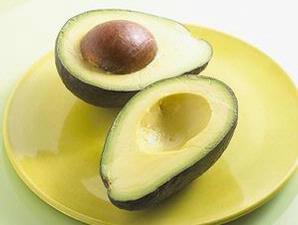
Avocado leaves for antihypertensive

Disease of high blood pressure becomes silent killer after causing malfunctioning of the heart, kidneys, cognitive, and stroke. Lecturer and researcher Department of Pharmacy Faculty of Mathematics and Natural Sciences University of Indonesia, Azizahwati, diversifying antihypertensive drug dosage form of herbal capsules avocado leaves.

Azizahwati Wednesday (15 / 6), presented the Final Report of Research Grant, University of Indonesia (UI) in 2010 at UI, Depok, West Java. He researched pengapsulan avocado leaf extract (Persea americana Mill) with a team from the Department of Pharmacology Faculty of Medicine, UI, ie H Purwaningsih Erni, Endang Hanani, and Sutriyo. They obtained the UI research grants in 2010 amounted to Rp 164.8 million.

According to the Head of Sub-Directorate of Research and Industry Incubator Yasman UI, UI research grant from the Community Fund Programme taken from the operational costs of education (BOP) submitted by each student enrolled. Year 2010 is available grants for 199 research activities.

Categories of activities include initial research, graduate, seeded, and multidisciplinary. Large fund of Rp 40 million (preliminary research) to Rp 175 million (multidisciplinary research). "The principal investigator is required from the UI," said Yasman.

Yasman acknowledged, research is done largely to satisfy the curiosity of the professors or researchers, so the percentage of research results that can be applied to society and industry is still relatively small. However, the team Azizahwati prove they are fairly applied research to provide an alternative packaging and herbal medicinal products.

Antihiperlipidemia Azizahwati say, other than as antihypertensives, avocado leaf capsules has been demonstrated as antihiperlipidemia. Hyperlipidemia is a condition caused by fat content or cholesterol is too high in the blood.

For patients with hypertension, obesity is a hallmark of them. Pump power of heart and circulatory blood volume in obese patients with hypertension will be higher compared with patients who have normal weight.

For those who have hyperlipidemia, dietary fat a major cause. That coupled with a sedentary lifestyle to trigger hyperlipidemia.

Hyperlipidemia is one of the triggers of a heart attack, namely when cholesterol in the blood that precipitate as plaques in blood vessel walls to collapse and clog the blood vessels. Hypertension and hyperlipidemia highest cause of death today.

Azizahwati said the research would dikapsulkan avocado leaves are used as herbal medicinal products phytopharmaca par.

Phytopharmaca be prescribed as medicines made from synthetic chemicals. Process towards phytopharmaca must pass clinical trials in humans.

Azizahwati research is still at the preclinical stage, which is tested in mice (mice). Research results showed that ethanol extract of avocado leaves have antihiperlipidemia effect.

Mice were divided into three groups and given the extract of avocado leaves with each dose of 10 milligrams per kilogram of body weight (mg / kg), 20 mg / kg, and 40 mg / kg. Groups of mice were tested with avocado leaf extract dose of 40 mg / kg gave the best results.

Ethanol extract of avocado leaves are also known to function as an antihypertensive dose of 40 mg / kg. Ability to reduce arterial blood pressure an average of male and female mice at 58 mmHg and 54.5 mmHg.

To be suffering from hyperlipidemia, induced murine yolk or other animal fats into the body. The condition of mice obtained by hypertension induce salt.

Dryers are used for avocado leaves is Avicel PH 101 with a ratio of 1:0,75 and the addition of Aerosil 8.3 percent.

Use of Avicel PH 102 is mentioned as the best formula for having a mass density (bulk density) and flow rate are greatest. The result contains a compressibility index, water content, and destroyed the small time.

Maceration

Preparation of avocado leaf extract is done by maceration with 70 percent alcohol. Maceration is soaking to remove the active compound in powdered avocado leaves. A total of 300 grams of powder avocado leaves macerated with alcohol 70 percent, until it reaches a yield of 29 percent.

Capsules avocado leaves become standardized herbal medicines are yet to be developed into phytopharmaca. Azizahwati still require further research to human clinical trials.

For ordinary people, avocado leaves can not imagine giving the benefit of lowering blood pressure and high fat content. Hypertension and high cholesterol is a threat of disease that many people whack.

Research Azizahwati managed to open the eyes of all levels of society. The wealth of nature around us is quite significant in providing health benefits.

Cave Regions Sentonorejo Sleman Ready So Attractions

Regions Sentonorejo Cave Temple, located in Bang Village padukuhan Jogotirto Berbah Sleman Yogyakarta ready to be opened to tourism, cultural and environmental heritage in 2011. This area is very special because in it there are three valuable sites at once.

These three sites include caves Japanese relics once used to secure the place of Adi Sucipto airport from sekarangan allies, Candi Abang built with red brick, and Cave Sentonorejo relic of Old Mataram Kingdom. These sites become cultural heritage official government DIY Province since 2008.

Camat Berbah Sleman, Drs. Krido Suprayitno, SE, MSi, explained the purpose of the third opening of this site as a tourist is to preserve the values ​​of historical, archaeological rescue assets, and preserve the environment. Especially for environmental tourism, local government rescue package the concept of the environment in two ways to preserve forests and the conservation area of ​​20 hectares of primary catchment area for the anticipation of damage due to eruption of Merapi.

Drs. Krido Suprayitno added that the government still will explore cultural sites that may still be undiscovered. It would not add to the cultural sites that originate from outside the region in order to maintain the authenticity of cultural heritage.

Special anymore, the local government has created a ballet of nature that illustrates the importance of preserving nature and culture. Ballet will be offered to visitors in order to make their way home from the region could be a cadre of environmental rescue in the area. Later, this ballet will be an icon District Berbah serious attention to environmental issues.

This tourist region officially launched in 2012. Even so, residents are allowed to visit

Acts of lawless Children on the Beach Elegant

He returned after a long wander. The boy was a poor man. But when I got home, he has become wealthy young man and brought along his lovely wife. Unfortunately, all that he stained with bad morals.

Her mother is old and faithfully waited for the child's home was forced to swallow bitter truth. On behalf of the prestige, the boy did not recognize his own mother. Sad and disappointed, the mother also condemned the rebellious son. The ship carrying the child and his wife hit by the storm. Becomes a real curse. The boy turned to stone.

Malin Kundang folklore of Minang realm is so popular in Indonesia. The story was not only known by the Minang people. But also any children of various races is so familiar figure Malin Kundang. A story with the local wisdom that teaches the importance of filial piety to parents of a child.

Stone allegedly touted as Malin Kundang you can find at Sweet Water Beach, Padang, West Sumatra. To reach this location, you have to travel overland for about 30 minutes through a winding road and uphill.

At Sweet Water Beach, you'll see a stone shaped like a middle man face down. This stone is touted as Malin Kundang. Some other stones that littered the surrounding debris believed to be carrying shipwreck Malin Kundang. At high tide, the waves would wash the rocks. That said, the waves crashing the rocks that produce a sound like wailing. Like a sad melancholy regret Malin Kundang.

Sweet Water Beach famous not just because the story of Malin Kundang. Panorama sunset at the beach is pretty incredible. In sunny weather, the orange ball touches the horizon the sun slowly go down. In addition, consistent waves always appear, making the Sweet Water Beach a favorite place to surf. Moreover, the waves are not too high so it is suitable for beginners.

Dark brown sand tend to any other uniqueness. The beach is so broad and flat. Walking on the beach is like walking on the terrain. Width of about two hundred yards at a time when the water receded. About five hundred yards from the stone Malin Kundang to the west, there is Banana Island. No humans who inhabit the small islands.

Actually do not deserve to call as an island. Because, Banana Island and Sweet Water Beach are connected together. In times of low tide, you can walk to Banana Island. Well, in at high tide, the small area was separate from the Sweet Water Beach so it was like an island. Wild monkeys that inhabit the island yet docile. Hold a picnic while eating guava grow in the island becomes exciting activities.

"But be careful if the tide, will not be home. Because water is so high," Doan who works as a driver as well as guides from Padang warned.

Picnics, surfing, swimming, to camping. Various activities can dilakukanj by tourists when visiting Sweet Water Beach. Therefore, this beach is also a favorite of the tourists when visiting the city of Padang. But still the main attraction for domestic tourists is the story of the prodigal son who has inherited down through the bedtime stories every Indonesian children.