Showing posts with label Tradition. Show all posts

Tarung and Waitabar Villages: Megalithic Traditions in the heart of Waikabubak City on Sumba

 In the heart of the expanding city of Waikabubak on the island of Sumba, clumps of straw can be seen peeking out of fences on the top of a hill. There, people in the village still hold steadfast to their old religion and traditions that have been taught them through the centuries by their ancestors.  

The town of Waikabubak, capital city of the district of West Sumba, nestles in a valley counting a population of around 26,423 persons only. But among its more modern brick  buildings there  still remain many traditional villages where its communities continue to  faithfully follow the old ways that were brought down through the  generations.  Most of these villages  are built on the hills around  the outskirts of town  but there are  also those that are  right  within the city of Waikabubak.  

Among these, the villages of Tarung and Waitabar should be on your list to visit. Although they have different names, they are in fact connected in one compound and are located in the heart of Waikabubak. Just within minutes from the city center you will be suddenly carried back to ancient times and come face to face with the original Sumba faith from long ago.    

Both villages donot only function as places of residence but are moreover social institutions that are called Marapu, which is also the name of their religion and religious practices that have  changed little  through the ages.

The traditional Sumba house called uma follows the old Sumba architectural style known colloquially as skyscrapers. It is square in shape built on a platform that is supported by wooden piles around 4 strong main pillars called kambaniru ludungu.

Additionally there are 36 pillars to support the portal structure (or  kambaniru) that are connected by wooden pins made of mosa, delomera or masela wood.

The traditional Sumba house consists of three storeys. The first or top floor (toko uma) is cone-shaped like most towers, and is used to store the sacred heirlooms or at times also the harvest.  Below this are the living quarters (bei uma) that donot touch the ground. Access for men is differentiated from the access for women. Then there is a large open area (bangga) with bamboo flooring that is used for communal meetings and family deliberations. The lowest level is the area below the house (kali kabunga). This area is used as pens for pigs, cows, goats, horses, water buffaloes and other animals.   

Apart from  these houses are others meant for specific purposes. There are tall structures to keep horses with the lower level used as pig sties (uma jangga). Another is used as a sacred temple for marapu rituals and  to pray to the ancestors (uma ndewa) which may not be used for living quarters. While another is built specially for communal  village meetings (uma bokulu).  

You will also notice that the roof is made of thatch. These simple structures are made with simple tools such as machetes and hatchets as metal was only introdued by the Portuguese when they arrived here  around the 16th century.

The traditional villages of  Tarung and Waitabar are located on a hill surrounded by large boulders.  They are easy to reach from the city center of Waikabubak, capital of the District of West Sumba. The town is about  one hour ride from the Tambolaka Airport.    Garuda Indonesia operates regular flights to Tambolaka from Bali and Jakarta.

The town of Waikabubak is indeed your best starting poimt to see the wonders of West Sumba. For, besides the villages of Tarung and Waitabar there are two other equally  interesting villages to visit,  which are:  Bodo Ede and  Bodomaroto.

When you visit the village during the day you will meet few people since most will be working the fields nearby. In the village most will be children, women and girls busy weaving in front of their homes. The afternoon is a  better time to visit when you will meet more people enjoying the evening hours chatting and joking.

In these villages you will find long rows of houses as arranged through the ages. In the center are stone megalithic tombs of the dead called waruga (not unlike the warugas in North Sulawesi). Both the Uma and the Waruga are symbols of the Sumba cosmology that is adhered to until this very day.

Take time to observe all the details and take as many pictures as you need of these structures and their details, as well as  the daily life of the villagers but please do this with respect and empathy. Chat with the population, for the Loli ethnic people are known for their  hospitality and friendliness to outsiders.  

Notice how the walls of the houses are decorated with buffalo horns and pig jaws. The more there are the higher the status of the owner of the house. Since the horns and jaws denote the number of feasts the owner has hosted.  

Notice also the Uma Marapu, the sacred place believed to be the home of the ancestors. See also the adung pillar. Which is an old dead tree which is hundreds of years old where enemy skulls used to be hung and publicly  displayed.

Most visitors to these villages are tourists, anthropologists, researchers or students, who do not come just to sightsee but to study the ancient rites and the  Marapu religion  of Sumba.  

Indonesia Travel

Bamboo Raft, Efforts to Introduce Loksado


Initially, bamboo rafts known as the Dayak community transport crops Loksado Amandit River, South River Hulu regency, South Kalimantan. But now, a raft used to travel down the river while enjoying the natural beauty Meratus Mountains. That's what the 53 teams of participants raft of bamboo (bamboo rafting), which follows Tourism Balanting Paring, namely Amandit down the river with a bamboo raft.

In addition to commemorating the 62nd anniversary of the district administration, an event held at the end of December last year to lift Loksado name and image to the outside world.

Loksado an area bermukimnya Meratus Dayak tribe, located on the River Amandit Hulu, Hulu South River, South Kalimantan (South Kalimantan). Meratus Mountains region is known to have a very beautiful nature, beautiful, and natural.

"Lanting Paring"

In the language of Banjar, lanting Paring used to refer to a bamboo raft, which consists of 16-20 bamboo rod with a length of more than 6 meters. Bamboo poles that are lined up and tied together with rope. Bamboo raft ride five passengers plus a jockey, which serves to control the direction and purpose of the bamboo raft,

Jockey who was standing at the front of the raft plays an important role. Holding a long pole about 3 feet, the jockey tried hard to control the pace of the raft in order to cross the rapids safely. Occasionally, the jockey had to jump into the river in order to steer the raft to be maneuvered in between the rocks.

However, so the jockey can not be indiscriminate. It also must be agile. Quite often, when in the middle of the journey, bamboo slats bound with ropes to bring the bamboo is cut off due to friction between the raft and rock. This is where the role of the jockey, who must continue to keep the bamboo scattered and passengers fell into the river. With the depth of the river that reaches 3-4 feet, then the jockey should be able to mend ties with a new rope.

Not many people know the exact distance covered bamboo raft down the river when Amandit. Usually they just memorized by time. For example, close to local Tanuhi Loksado terminal, the distance can be reached within two-three hours. If measured by road distance approximately 8 kilometers.

However, many bamboo raft trip along the beautiful scenery that can be enjoyed. Not only the landscape is hilly and relatively green, but also the Dayak community activities that also attract observed, both in the villages and fields, or the river.

When down the river, tourists can also see a variety of vegetation that grows along the river flow Amandit. If lucky, they could see the orchids, which grow well in the soil and the trees trunk. Meratus Loksado and this is known as a natural orchid habitat in Borneo.

According to the Indonesian Orchid Association of South Kalimantan, from the 4000's orchid plants in Indonesia, 3,000 's of them were in Kalimantan. Of the total 3,000-an orchid, the 1000's which are located in South Kalimantan, especially in the mountains Meratus. Among the types of orchid Phalaenopsis Cornu Cervi (orchids month saws) and Grammatophyllum Speciocum (cane orchids).

Several other types of flora are the wealth Meratus various spices, such as nutmeg, cinnamon, cloves; fruits, and rubber. Loksado himself known as a cinnamon-producing areas in South Kalimantan. Community activities as harvesting cinnamon and rubber are also quite attractive if it can be seen.

Once separated from the Amandit, passengers will enter the area Loksado, which still holds some other interesting wealth. In Tanuhi, for example, there are hot springs that can be enjoyed all the time. In the mountains with elevations of about 800 feet above sea level, there are also a number of waterfalls though not too high. For example, Haratai, Riam Hanai, Rampah Menjangan, and Rapid Fire.

Can be sold

Syriac, Head of Tourism and Culture Hulu South River, said the region also has the potential cultural Loksado form of the Dayak community.

In this area, there are 43 halls adat (traditional house), the largest Stempel Malaris. "Here, tourists can see Aruh (traditional ceremony) if it happens to be right time, such as during harvest," he said.

Aliansyah (30), a resident, said, if there are tourists who are interested in riding a bamboo raft, they can rent out to residents. The rent is Rp 250,000 for one-way.

Interestingly, bamboo raft down the river to be hired for downstream, will not be taken back to the pit. The bamboo will be sold to residents in the downstream. Bamboo is used for bamboo fences and cages chicken. "The selling price of bamboo Rp 20,000-Rp 25,000," added Aliansyah. Tourists visit the region's crowded in August until the end of the year.

Currently, the package is recognized bamboo raft on the rise. Tourism services is mostly no longer managed by the society as a sideline. Most professionally managed.

The rise of a bamboo raft tour packages followed by the growth of other facilities for tourists. Facilities that include lodging facilities for tourists. Currently, there are only three hotels. Sure, it's not enough.

Another problem, the problem of road infrastructure and bridges to Loksado also still need to be addressed. Conditions Tanuhi bridge, for example, is also still a concern. Similarly, for passenger transport vehicles are still minimal.

As a tourist destination, Loksado course development is also expected to bring progress and prosperity of its inhabitants. However, did it all happen?

Indeed, not all the Dayak Loksado enjoy welfare. If anything, it has a handful of people. Of course, not to complain as local community leaders, Sartono Peter, "People just be spectators."

kompas

Keep Customary Law Tengger Tribe Village Charm


Tengger tribe in East Java is known to still hold fast to noble values ​​espoused according to customary law. Although not written, this law has been imprinted on their minds.

One of the Tengger tribe village located in the district of Malang, East Java, is the village of Ngadas. The village is located at an altitude of approximately 2100 meters above sea level is occupied by 1800 the majority of the population's living as a vegetable farmer. Administratively, this village subdistrict Poncokusumo entry.

Besides in Malang, Tengger tribe villages spread over Pasuruan, Probolinggo and Lumajang. The numbers in the dozens of villages and is in the area of ​​Bromo Tengger Semeru National Park.

Before there was a national park, Tengger tribe has occupied the region since hundreds of years ago and helped maintain the balance of nature there. They depend heavily on nature so that each ceremony is always performed to pay homage and tribute to nature. In fact, there is a traditional ceremony led by a shaman or ceremonial leader whose goal pray and ask forgiveness of nature, earth, water, and trees because they use it every day.

There are several ceremonies held Tengger tribe, such as Karo and Yadnya Kasada ceremony. Not only that, one of the ceremonies held every five years, known as Unan-Unan, also drawing attention of researchers, tourists, students, and the general public to see it.

As did the people in the village Tengger Ngadas, they just hold the ceremony Unan-Unan on December 30, 2012 last. The ceremony aims to give alms to the nature and contents, including those who guard places, such as springs, villages and farmland.

"This ceremony is also to pray that the residents were given the safety and convenience of fortune got," said Shaman Ngatrulin (80).

Shamans Ngatrulin itself has become a ceremonial leader since 1955. He explained that, before the offering was brought to the Studio as a place Pamujaan offerings, diverse variety of offerings, such as buffalo head equipped 100 pieces of cone and its contents are wrapped in leaves tlotok, marched from the village head Ngadas. The procession was led by the shaman, village chiefs, and the people are respected and followed by all residents and accompanied tetabuhan.

After arriving at the Studio, each one offering mantra recited by the shaman. Previously, the history or the history of ceremonial Unan-Unan also told by shamans and listened to the wisdom of the people. After all the mantra recited offerings, the offerings are then distributed to residents and a bone of contention. Still, happy and relieved look on his face could be seen on their faces after holding this ceremony.

After uapacara in Studio Pamujaan, all residents are welcome to come to the house of the village chief to hold Kauman or a bite to eat together. Atmosphere of mutual respect and intimacy is created and the main attraction.

In fact, the village chief Kartono Ngadas invited guests to participate in the event Kauman and should not be rejected because it was considered disrespectful and will offend them. "People Ngadas better adherence to customary law and uphold honesty," he said.

Not only the behaviors and rituals that are particularly attractive. Views of rice fields on the slopes of the hills and the peak of Mount Semeru travelers can see from this village. Panorama of sunrise and sunsets and passing Tengger girl with typical holster strapped tourists stay at home also adds in a village full of charm.

okezone

700 Local Languages ​​in Indonesia Endangered!


Preservation of local languages ​​in Indonesia is in distress! How not, 700 languages ​​in Indonesia threatened with extinction, even 169 languages ​​of which only have less than 500 speakers.

Indonesia is generally divided into two groups of language family, namely Austronesian and non-Austronesian. Language which belong to the family of non-Austronesian numerous in eastern Indonesia. Based on the research conducted, it is unknown if the family of languages ​​is the most alarming condition.

As many as 169 languages ​​are from eastern Indonesia even have speakers who number fewer than 500 people. Various things suspected to be factors causing the extinction of a language. UNESCO itself issued nine factors that could cause the extinction of a language.

"Ethnic language may be extinct in the absence of successors who use such language, as well as a language lost to 'compete' with other languages ​​or because they keep a very traditional," said RMT Multamia Lauder, a linguist at the University of Indonesia when met LIPI, Jakarta, recently.

Currently, he added, many parents do not teach their children to the local language so that no new generation to preserve it. Connection with an indigenous tribe, for example, occurs in Multamia language, the vocabulary documentation can only be learned by the descendants of the king.

"Yes, how can be preserved only if access is limited. So, when the royal family was exhausted, the language would be extinct, "he added.

"I think maybe we should approach and understanding of how language is important, language is not just a property of the king. In fact, if this language can be preserved, Indonesia will increasingly rich culture and diverse, "said Endang Turmudi, Head of the Research Center for Social and Cultural LIPI, on the same occasion.

It also makes the Indonesian Institute of Sciences (LIPI) conducted a study of six languages ​​in the three provinces. The study was conducted as an initial effort to preserve the language in the area. Language study focused LIPI, among Gamkonora in West Halmahera, Kao and Capping in North Halmahera, Oirata Kisar Island, and Kui and Kafoa Alor Southwest.

"There are a lot of ethnic minority languages ​​in eastern Indonesia are threatened with extinction, it would require a comprehensive effort to preserve the language, one through family always taught her native language and learning in schools," he added.Even this study attempted to collect vocabulary of any language is almost extinct.

Then, the plan, the vocabulary will be incorporated in a dictionary to be a form of documentation in the future. This long process will last until 2014, in which the vocabulary collected will continue to grow.

In 2014, due to be launched dictionary contains six languages. In the event, even this research report expressed the desire and hope of making a museum as a place to store the language and learn the language documentation.

okezone

Jogja Java Carnival 2011 confirms Yogya As a City of Culture

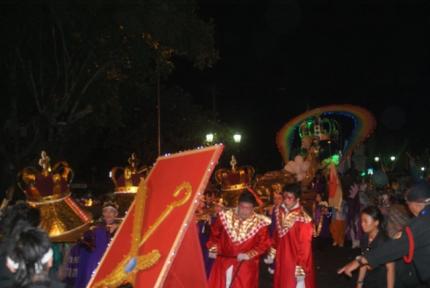
Jogja Java Carnival (JJC) in order HUT-255 to the city of Yogyakarta on Saturday (22/10), confirming the existence of the more valued as a cultural city of Yogyakarta. Conceptually, JJC this year raised the power of tradition that is embedded in the old city of Yogyakarta.

Similarly, the Governor of Yogyakarta, Sultan Hamengkubuwono X, expressed as JJC opened in the plaza north of Yogyakarta. "The hope JJC can confirm the character of the city of Yogyakarta as a condition characterized by cultural values​​," said Sultan.

Sultan said the event was JJC add more cultural harmony and tolerance between communities. Multiculturalism was, he added, should continue to be upheld for the harmony for all parties.

He also added, in order to be more colorful and Yogya become livable cities, the arrangement must always involve the community.

Meanwhile, Mayor Herry Zudianto said also that the JJC into a creative arts event that demonstrated the potential of Yogyakarta culture to the world. 2000 both local and foreign artists involved in the JJC. "This is evidence of art and culture are universal to language and communication without borders," he said. In accordance with the theme this time is taken JJC, Magniworld (Magnificent World) or the wonders of the world.

(Read: Wonders of the World Present at Jogja Java Carnival)

Herry explained, packaging carnival this year did not exist in the previous administration. The presence of technology, the composition of shapes, colors, light fused together in an artistic manjadi interesting.

JJC is a carnival activity vehicle that had been held for the fourth time that each peak of Yogyakarta Anniversary celebration in October.

Royal Wedding Procession Preserving Culture Yogya

GKR Bendara peak wedding procession and KPH Yudanegara which took place today, Tuesday (18/10), were considered to undermine the current modernization that has been present in Yogyakarta. Procession Panggih as the culminating event has become a cultural tradition of Yogyakarta Palace evidence preserved until now.

"The procession is very grand Panggih Kraton Yogyakarta and Yogyakarta to be evidence of cultural preservation," said Andi Malarangeng Menpora, after congratulating the bride.

Panggih procession was the procession of the bride and groom meeting, after two days they undergo traditional procession in two different places. The procession is a symbol of the meeting in a sacred bond of marriage for family life someday acquire the best way.

Wedding Procession Coordinator KRT Yudahadiningrat said, the procession begins with a consent granted by the groom at majesties Dalem Penepen Mosque at 7:15 o'clock. Accompanied by his younger brother Sultan HB X, the groom's procession through prayer and the legalization of marriage by Raden Kangjeng prince. Consent granted after this, the procession was held Panggih.

The procession begins with the convergence of the bride and groom from two different places. For the bride the daughter of Sekar Kedaton, while the groom from Ward Kesatrian. Furthermore bride throwing gantal or betel leaf. Then the bride and groom to wash the feet followed by a procession pondhongan. Pondhongan procession is done by the groom and GBPH Suryamentaram that lifts the bride.

The end of the ceremony Panggih marked with the passage of the bride and groom and their parents to the place to receive congratulations. Invited guests including ministers, ambassadors, and other officials seemed swept up in the thick atmosphere of traditional Javanese.

And in the evening, a reception will be held again in Ward Kepatihan Yogyakarta Yogyakarta serving typical dances such as dance and dance Lawung Bedoyo Ageng.

While on this afternoon, the bride and groom will undergo train carnival procession from the Square north to Ward Kepatihan. This carnival will be witnessed by the citizens of Yogyakarta while enlivened with 200 angkringan free.